
Fun Chess Games & Puzzles to Play at Home
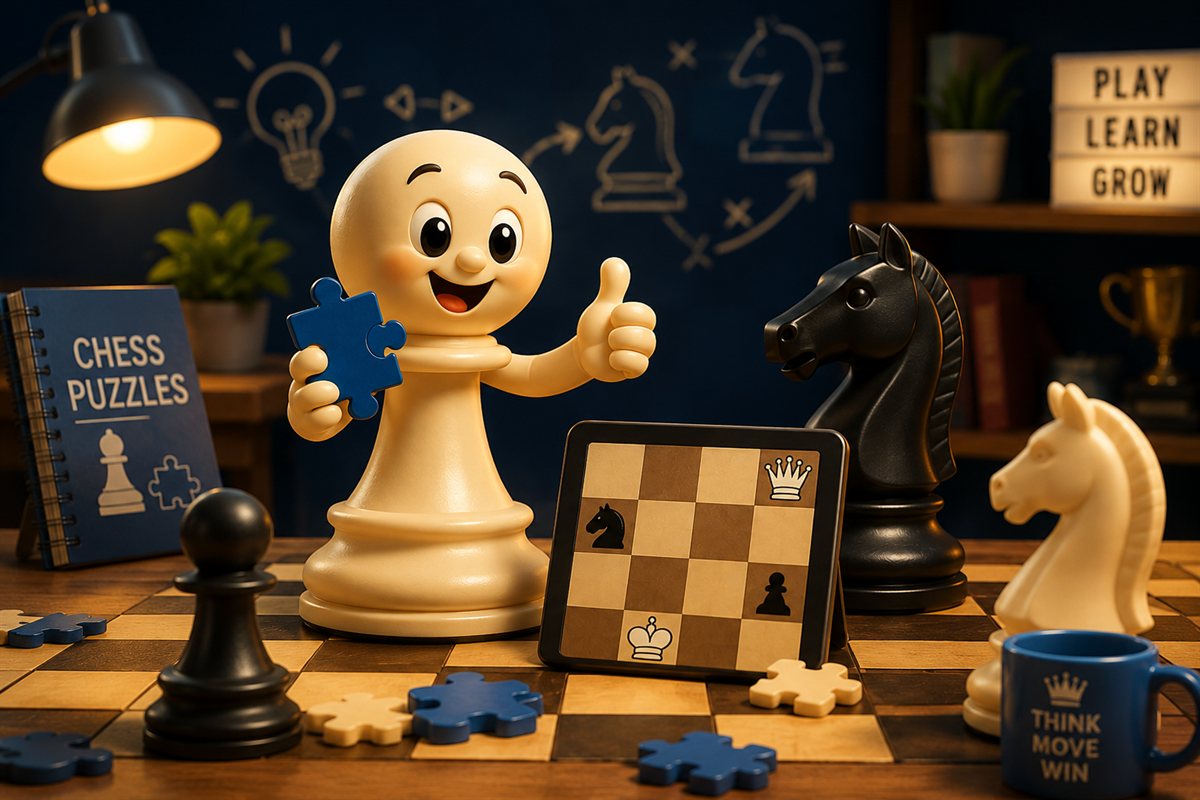
Chess doesn't always have to mean a long, serious game. Some of the best learning happens through play — quick mini-games, puzzles and silly challenges that keep children laughing while they sharpen their skills. Here are our favourite fun chess games to enjoy at home.
Why fun comes first
Children learn fastest when they're enjoying themselves. Bite-sized games lower the pressure, build confidence, and make a child want to come back to the board. The skills — focus, planning, pattern-spotting — sneak in along the way.
5 fun mini-games to play at home
1. The Pawn Game (Pawn Wars)
Set up only the pawns on their starting squares. The first player to get a pawn to the other side — or capture all the opponent's pawns — wins. It's a brilliant way to learn how pawns move, capture, and work together.
2. Knight's Quest
Place a single knight in a corner and challenge your child to "hop" it to a target square in as few moves as possible. It makes the knight's tricky L-shaped move feel like a puzzle game.
3. Checkmate in One
Set up simple positions where one move delivers checkmate, and let your child hunt for it. Quick, satisfying, and a fantastic way to train the eye for winning moves.
4. King of the Hill
A popular variant: the first player to march their king safely to one of the four centre squares wins. It flips normal strategy on its head and is genuinely exciting.
5. Beat the Clock
Give your child a small pile of easy puzzles and a timer. Racing the clock turns practice into a thrilling mini-challenge — perfect for building speed and confidence.
The goal at home isn't to win — it's to make your child fall in love with the game.
Easy puzzles to try together
- Spot the fork — find a move that attacks two pieces at once.
- Find the checkmate — simple mate-in-one positions.
- Save the piece — your piece is under attack; find a safe square.
- Promote the pawn — guide a lone pawn safely to the last rank.
These tiny puzzles build the exact pattern-recognition that strong players rely on. They also quietly grow concentration and focus.
Tips to keep chess fun
- Keep sessions short — 10–15 minutes is plenty for young children.
- Let them win sometimes — confidence keeps them coming back.
- Celebrate good moves, not just wins.
- Play together — your enthusiasm is contagious.
Turning fun into real skill
Games at home spark the love of chess — and a little structure turns that spark into genuine ability. A coach who keeps lessons playful but purposeful makes all the difference. See how our Pawn-to-King learning path blends fun and progress, or read about the benefits chess brings to children and the best age to start.
Make learning chess fun for your child
Book a free demo class — our coaches make every lesson engaging, playful, and full of those "I did it!" moments.