What Is the Best Age to Start Chess? A Parent's Guide
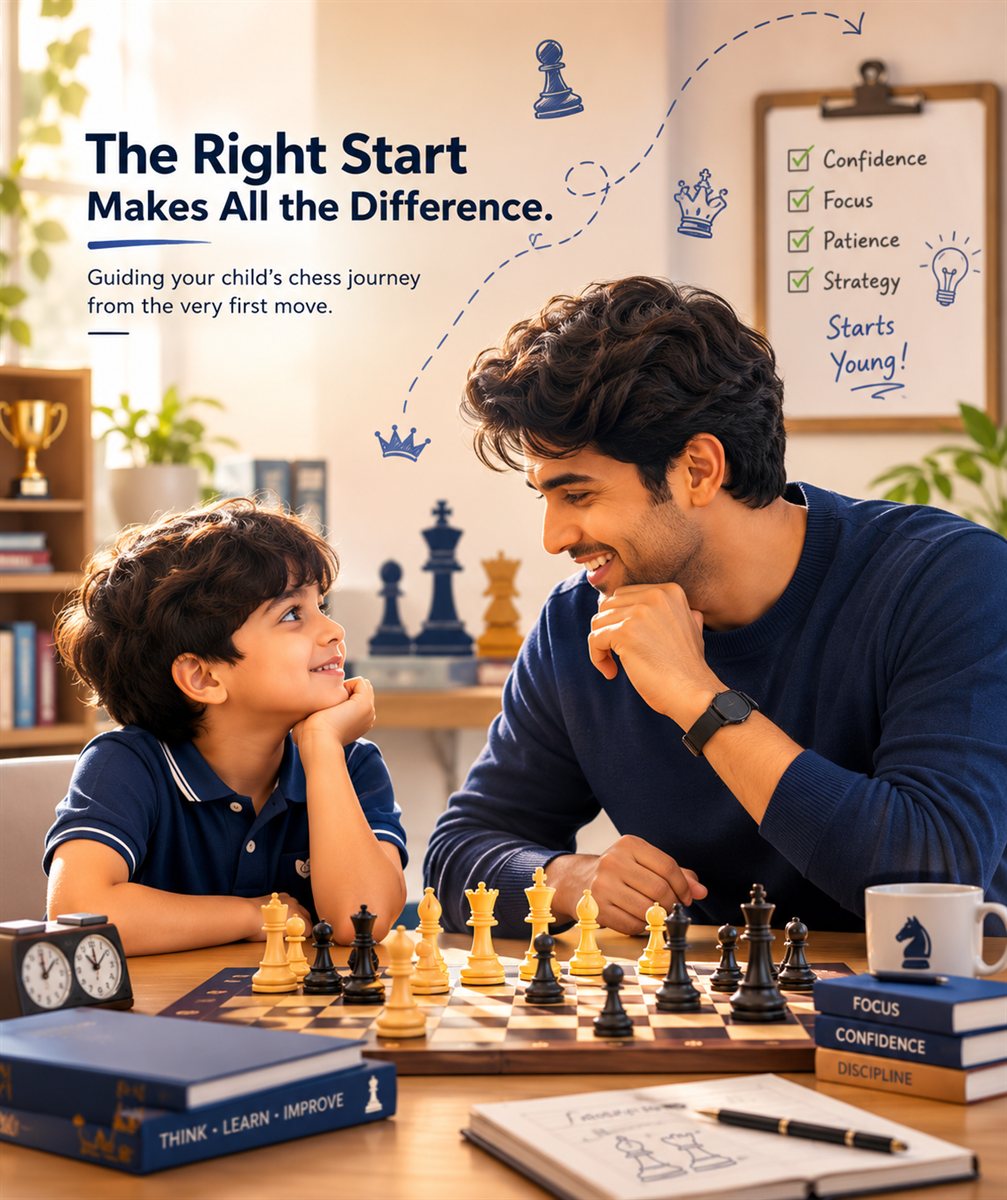
One of the most common questions parents ask us is simple: "When should my child start learning chess?" The encouraging answer is that there's no single magic number — and for most children, earlier is easier than you might think.
The short answer
Children can begin learning chess from around age 3 to 4, as soon as they can recognise shapes, follow simple rules, and sit for a short, playful activity. At our academy we welcome learners from age 3 and up, and we adapt the teaching style completely to the child's age. There is no upper limit either — teenagers and adults learn beautifully too.
Ages 3–5: playful first steps
At this age, chess isn't about strategy — it's about recognising the pieces, learning how each one moves, and having fun. Young children are natural pattern-learners, and short, game-like sessions build familiarity with the board long before they ever play a full game. Starting here gives a lovely head start in focus and patience.
Ages 6–10: the sweet spot
Many coaches consider this the ideal window to begin serious learning. Children in this range can:
- Understand rules and basic tactics quickly
- Concentrate for a full lesson
- Start enjoying friendly competition and small tournaments
This is when a structured curriculum really pays off — steady, level-by-level progress turns curiosity into genuine skill.
Teens and adults: it's never too late
If you think your child (or you) "missed the boat," don't worry — you absolutely didn't. Older beginners often learn faster because they grasp logic and planning more readily. Plenty of strong players started in their teens or as adults. The key is good coaching and consistent practice, not starting young.
The best age to start chess is the age your child is right now.
Signs your child is ready
- They can sit and focus on an activity for 10–15 minutes
- They enjoy puzzles, building, or "what happens next" games
- They can follow simple turn-taking rules
- They show curiosity about the pieces or the board
If a few of these sound familiar, your child is ready to try.
How we teach the youngest learners
For very young children we keep classes short, visual, and full of stories — the rook becomes a "castle that moves in straight lines," the knight "jumps like a horse." Small group sizes (6–8 students per class) and certified, FIDE-rated coaches mean every child gets attention at exactly their level. You can read more about our approach on the About page, or see the kind of results students achieve in our Student Spotlight.
Not sure if your child is ready?
Book a free demo class — we'll assess your child's level and recommend the perfect starting point, with no obligation.