How to Get Started in Chess: A Beginner's Roadmap
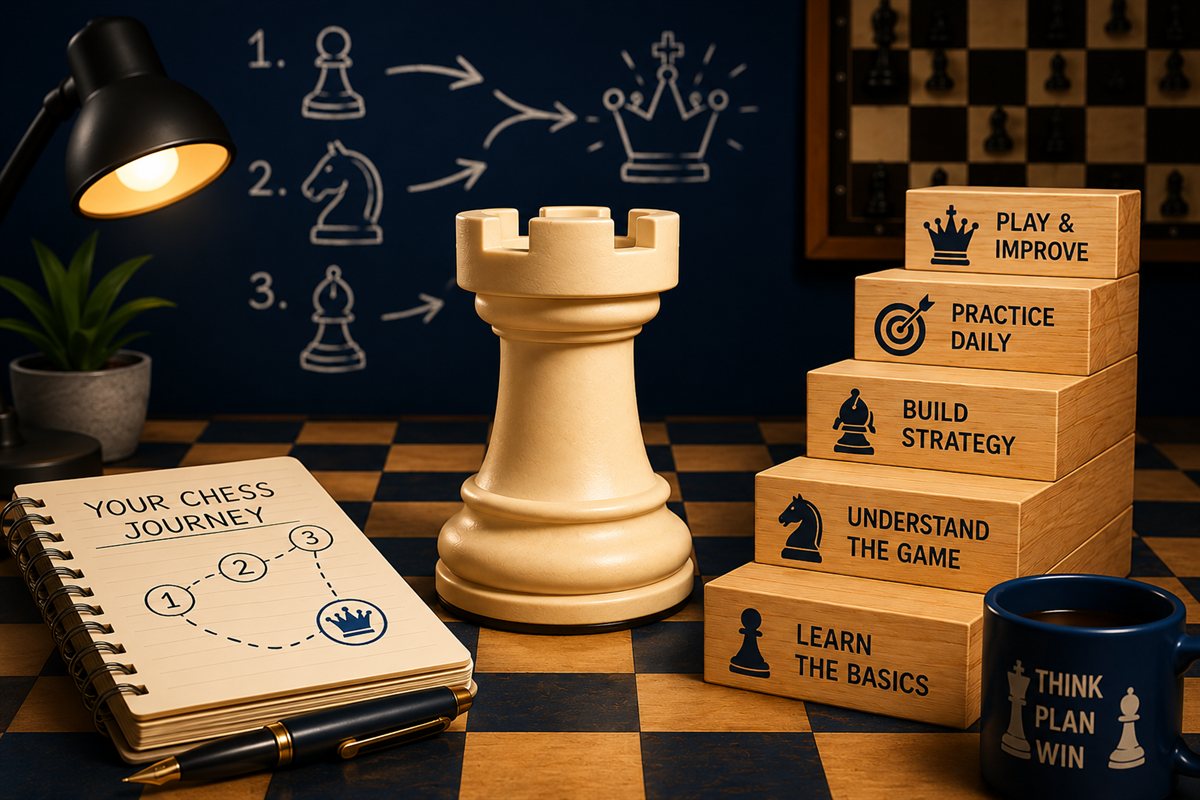
Starting chess can feel overwhelming — but it doesn't have to be. Improvement comes from following a clear path, one step at a time. Here's the same beginner-to-master roadmap we use with our students, from your very first move to your first tournament.
Step 1 — Learn the board and the pieces
Begin with the basics: the 8×8 board, the names of the pieces, and their starting positions. Get comfortable with light and dark squares and the idea of files, ranks and diagonals.
Step 2 — Learn how each piece moves
Master how the pawn, knight, bishop, rook, queen and king move and capture. Then add the special moves — castling, en passant, and pawn promotion. This is the heart of our Pawn (Beginner) level.
Step 3 — Understand check, checkmate and stalemate
Learn the goal of the game: trapping the enemy king. Practise simple checkmates so you can finish a winning game confidently, and learn to avoid accidental stalemates.
Step 4 — Learn opening principles
You don't need to memorise openings. Just follow three timeless ideas: control the centre, develop your pieces, and keep your king safe (usually by castling early).
Step 5 — Study basic tactics
Tactics win games. Start with the big ones:
- Forks — attacking two pieces at once
- Pins — freezing a piece in place
- Skewers — forcing a valuable piece to move and win the one behind it
Solving a few puzzles every day is the single fastest way to improve. This is the focus of our Knight (Intermediate) level.
Step 6 — Learn essential endgames
Many games are decided at the end. Learn key endgames like king-and-pawn and basic checkmates with a queen or rook. Strong endgame technique is what separates the Rook (Advanced) students from the rest.
Step 7 — Play regularly and review your games
Reading only takes you so far — you have to play. Just as importantly, look back at your games to see what went well and what didn't. Reviewing losses is where the biggest improvement hides.
Step 8 — Compete and aim higher
Once you're comfortable, play in friendly tournaments. Competition sharpens your nerves, reveals weak spots, and makes the game thrilling. This is the King (Master) level — preparing seriously, earning a rating, and chasing real goals.
You don't have to be great to start, but you have to start to be great.
The fastest way through the roadmap
You can absolutely follow these steps on your own. But a structured curriculum and a coach who corrects mistakes early will get you there far faster — and make the journey more fun. That's exactly how our Pawn → Knight → Rook → King learning path works, with weekly tournaments and certificates at every level. New to the game entirely? Start with the best age to begin and why chess is so good for children.
Start your roadmap with a free demo
We'll find your level and map out your exact next steps with a certified coach — free, and no obligation.