How Chess Improves Concentration — and Why It's a Brilliant Hobby
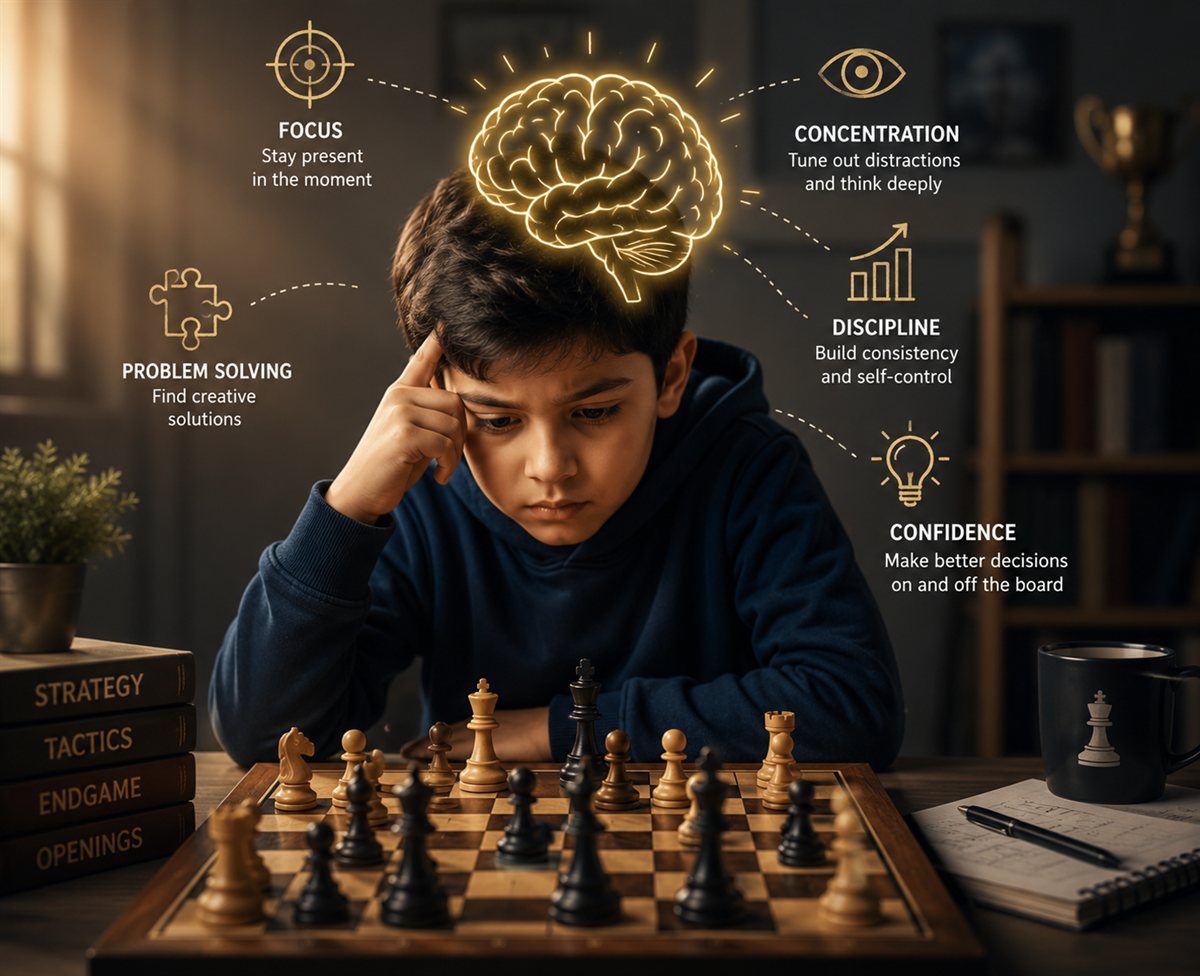
In a world full of notifications and quick swipes, the ability to concentrate deeply has become a genuine superpower — for children and adults alike. Few activities build that focus as naturally, and as enjoyably, as chess. It's also one of the most rewarding hobbies you can ever pick up.
Why concentration matters more than ever
Focus is the engine behind learning, problem-solving and good decisions. Yet attention spans are under constant attack from screens and distractions. Children who can settle, think, and stay with a task tend to do better at school — and feel calmer and more confident. Concentration isn't something you're simply born with; like a muscle, it grows with the right practice.
How chess trains focus
Chess is almost perfectly designed to strengthen attention. Here's why:
- Every move demands thought. There's no autopilot — each turn asks the player to look, think and decide.
- You have to think ahead. Planning a few moves in advance keeps the mind actively engaged, not drifting.
- One lapse has consequences. A single careless move can change the game, so players learn to stay present and check their thinking.
- Games build stamina. Sustaining focus across a whole game gradually extends how long a child can concentrate.
Over weeks and months, this "attention workout" becomes a habit the brain carries into everything else.
Chess teaches children to slow down, look carefully, and think before they act — exactly the skills that power great focus.
Focus that carries beyond the board
Parents often tell us the change shows up at home and school first: their child sits longer with homework, reads more carefully, and rushes less. That's the quiet magic of chess — the concentration built over the board transfers to reading, maths, and everyday tasks. It's one of many benefits chess brings to children.
Why chess is one of the best hobbies
Concentration aside, chess is simply a wonderful hobby to fall in love with:
- It lasts a lifetime. From age 3 to 93, you can always keep improving.
- It's affordable and accessible. All you need is a board (or a screen) and someone to play.
- It's social. Clubs, tournaments and online classes turn it into friendships and friendly rivalry.
- It's screen time that's actually good for you. Unlike mindless scrolling, online chess is active, thoughtful and enriching.
- It builds character. Patience, resilience and graciousness in winning and losing all come bundled in.
Simple ways to build the focus habit
- Solve a few puzzles daily — short, focused bursts work wonders.
- Play full games without rushing, and avoid distractions while playing.
- Review your games afterwards to notice where attention slipped.
- Join a structured class — a coach keeps practice consistent and engaging, which is what really grows focus.
New to the game? Our beginner's roadmap shows the exact steps, and our Pawn-to-King learning path turns casual interest into lasting skill — and focus.
Help your child build focus through chess
Book a free demo class with a certified, FIDE-rated coach and watch their concentration grow, one move at a time.