The Science Behind Chess: How It Boosts Brain Development in K–12 Students
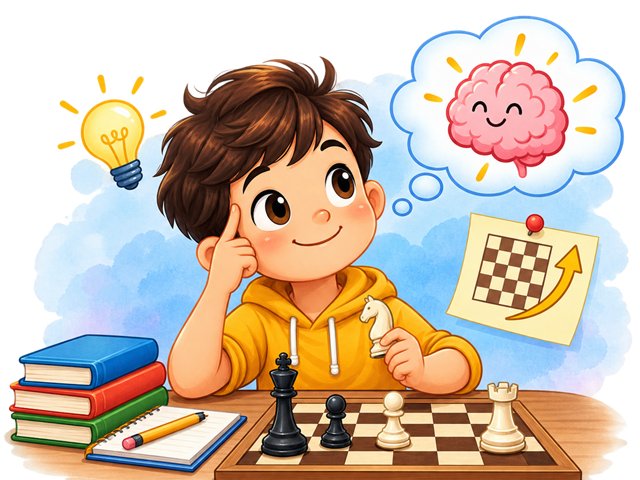
Chess looks like a quiet, slow game from the outside. Inside a K–12 student's head, it's the opposite — a fast, whole-brain workout in memory, pattern recognition, planning and self-control. Here's what that actually means for a developing brain, and how the K–12 years make the perfect window to build it.
What chess asks of a young brain
Every chess move draws on several mental skills at once, which is part of why researchers and educators keep coming back to it as a tool for cognitive development:
- Working memory. Holding a position, a plan, and several possible replies in mind at the same time.
- Pattern recognition. Spotting familiar tactical shapes and structures faster with every game played.
- Executive function. Weighing options, inhibiting the first impulsive move, and following through on a plan.
- Visual-spatial reasoning. Tracking how pieces control squares and interact across the whole board.
- Cause-and-effect thinking. Seeing a consequence several moves before it happens, and adjusting now.
None of these are chess-only skills — they're the same mental muscles a student uses in math, reading comprehension, and everyday problem-solving. That overlap is exactly why chess is so often used as a supplement to classroom learning rather than a separate hobby competing for a child's time.
Why the K–12 years matter so much
A school-age brain is unusually good at building new mental habits — it's still forming the pathways it will rely on into adulthood. Starting structured chess during the K–12 years means a student is building working memory, patience, and planning skills while those systems are most actively developing, not after. It's also why we group students by level rather than age alone — a curriculum matched to where a child actually is builds these skills far faster than one pitched too high or too low.
Chess doesn't just teach the game. Played consistently through the school years, it trains the same thinking a student needs everywhere else.
Where competitive play fits in: USCF and FIDE
For families in the United States, the US Chess Federation (USCF) is the national body that rates and organizes competitive chess tournaments, the way FIDE does internationally. A student doesn't need a rating to benefit from chess — most of the cognitive benefits above come from regular, well-taught practice, not from tournament results. But for students who want to compete, USCF-rated events give them a structured way to measure progress and play against opponents at a similar level, alongside FIDE-rated international events for those who want to go further.
Our coaching team includes FIDE-rated chess professionals, and we guide students who want to prepare for and enter USCF-rated tournaments once they're ready — competition is an option we support, not something every student is pushed toward.
Following results and finding tournaments
Once a student catches the competitive bug, half the fun is watching the wider chess world:
- US Chess Federation (uschess.org) lists upcoming rated tournaments across the United States, searchable by state.
- FIDE (fide.com) covers international events and the world rating list, useful once a student starts playing FIDE-rated events too.
- Local clubs and school leagues are often the easiest first step — smaller, friendlier, and usually where USCF-rated play starts for younger students.
Wherever your family is based, the same idea applies: your national or regional federation is the best starting point for finding real tournaments near you, and for checking results once your child has played one.
Give your K–12 student a head start
Book a free demo class with a certified, FIDE-rated coach and see how structured chess coaching builds focus, memory, and confidence — on and off the board.